Question 1 of 3Difficulty ●●●●●
The laser in a supermarket barcode scanner produces monochromatic light.
What does monochromatic mean?
GCSE Physics practice questions on refraction and lenses. Try 3 for free below — with hints, the answer and why the wrong answers are tempting. GCSE Beast has 29 questions on this topic, from first steps to the hardest exam-style problems.
The laser in a supermarket barcode scanner produces monochromatic light.
What does monochromatic mean?
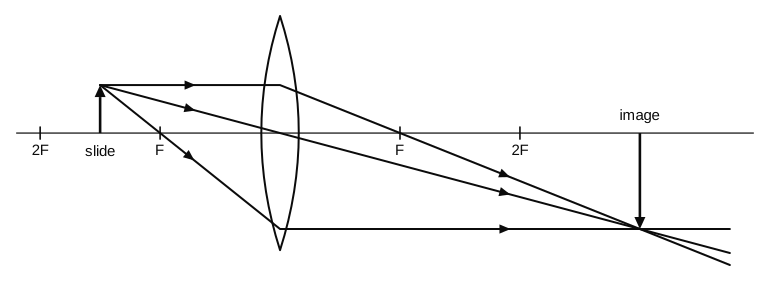
A pupil builds a model projector from a converging lens and a small illuminated slide. The ray diagram shows how the lens forms an image of the slide.
Which row describes the image?
| real or virtual | upright or inverted | size compared with the slide | |
|---|---|---|---|
| A | real | inverted | smaller |
| B | real | upright | larger |
| C | virtual | upright | larger |
| D | real | inverted | larger |
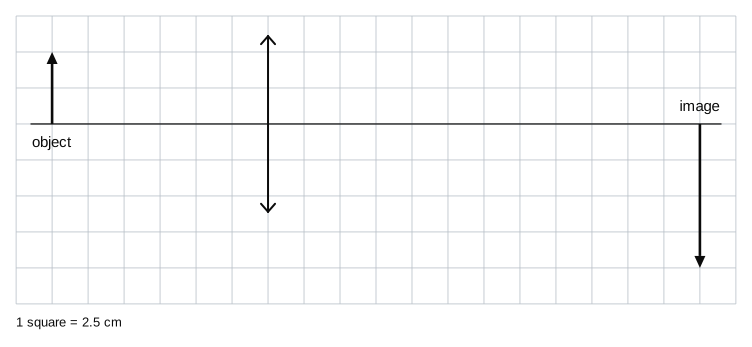
In a model of a slide projector, a converging lens forms a sharp image of an illuminated arrow. The diagram is drawn on a grid. The principal foci of the lens are not marked. 1 square on the grid represents 2.5 cm.
What is the focal length of the lens?